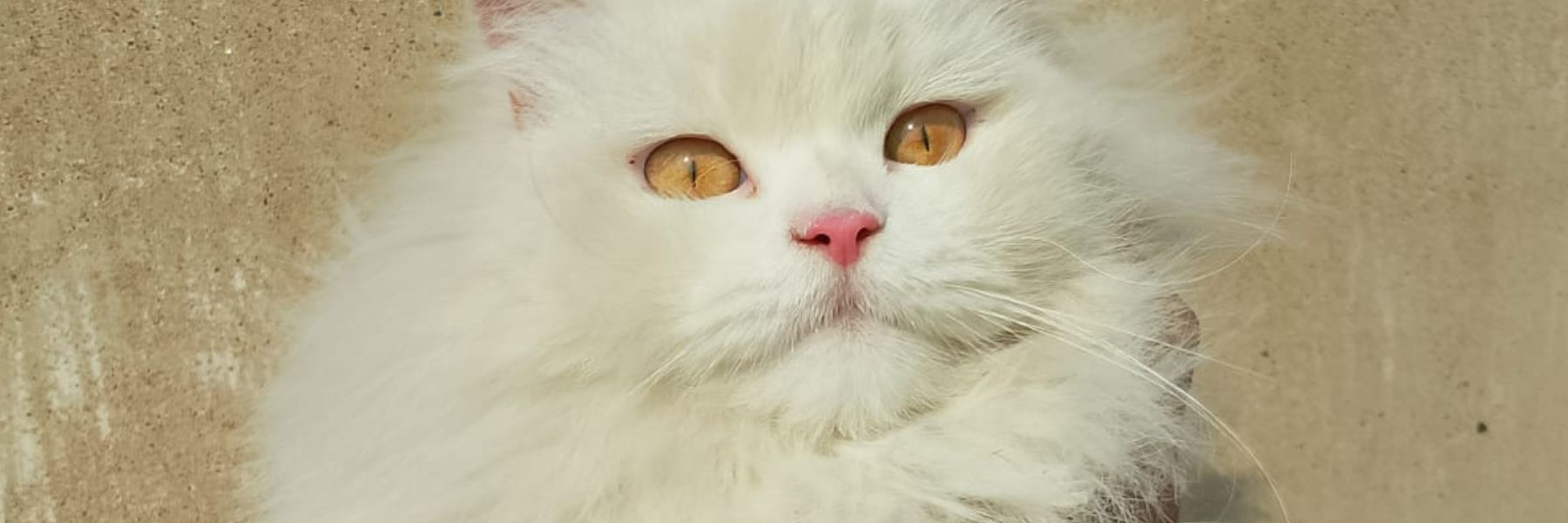
Why does cat stare at me? You’re sitting comfortably in a room, and suddenly you notice something shining like a diamond—those are your cat’s eyes. There’s no need to be scared. Your friend (the cat) cannot speak your language, so she depends on her body language, especially her eyes, to communicate.
From love to hunger, and from worry to curiosity—cats use their gaze for many reasons. There are several other explanations too, which we will discuss in this guide: why do cats stare at their owners, what they are trying to tell you with their eyes, and how you should respond.
Why Do Cats Stare at Their Owners?
Cats have a natural hunting instinct and strong vision designed for catching prey. When they hunt, they focus intensely and stare at their target. You might have noticed that when a cat wants to catch something, her pupils become larger—this happens because she starts staring and concentrating. This behaviour comes from their ancestors.
It’s completely normal for cats to do this, but sometimes it can also signal a problem. Whenever you see your cat staring at you, also observe her body language—such as blinking, tail position, and ear movements.
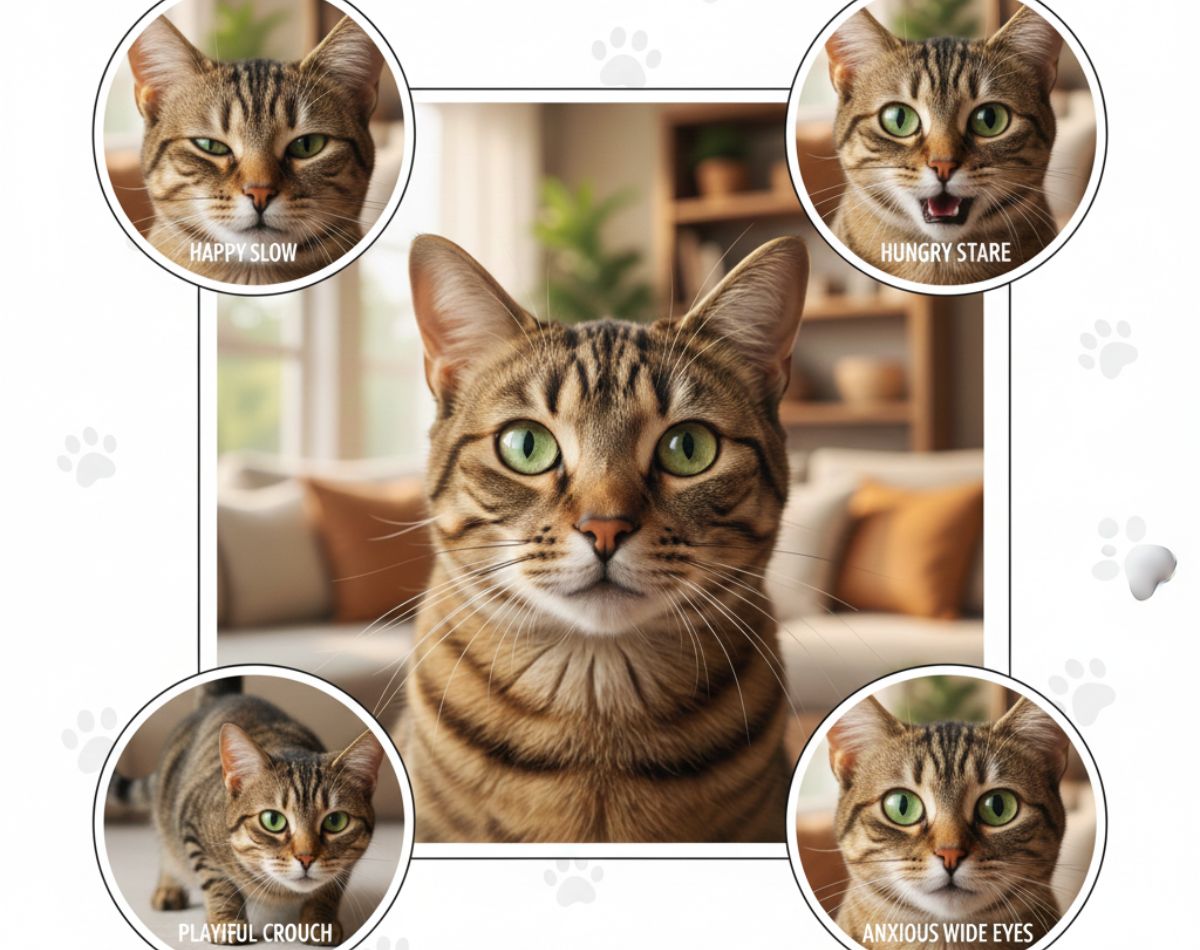
If your cat is looking at you with relaxed body language and half-closed eyes, this is a sign of love and trust. But if she is staring with wide eyes, stiff body, and little or no blinking, it could be a warning.
Main Reasons Why Does Cat Stare at Me
1. Your Cat Wants Attention
One of the main reasons your cat might stare at you is simply to get your attention. You’re busy doing your work, completely relaxed, and suddenly you feel like someone is watching you. When you look at your cat, she may respond by meowing or weaving around your legs.
This behaviour is most commonly seen in the morning or when your cat is meeting you after a long time. It’s her way of saying she missed you and wants your attention.
2. Your Cat Is Asking for Food
If your cat is very hungry—whether it’s before her usual mealtime, at the exact time, or even after—she may stare at you to let you know she wants food. She might also rub against you or lead you toward her feeding area.
Other cats in the home quickly learn this behaviour too. When they see that staring or following you helps you understand what they want, they adopt the same habit.
3. Your Cat Wants to Play
Adult cats or high-energy breeds often, when they are in a playful mood, lower their body close to the ground, wiggle their tail, and look at their owner with excited eyes. This basically means: “Follow me!”
This behaviour comes from their visual hunting instincts and feline nature. In the wild, small animals are part of their play and hunting practice. At home, moving curtains, a swaying chair, or even a piece of cloth can become an excellent source of play and stimulation for them.
4. Your Cat Is Curious About Your Actions
Cats are naturally curious creatures from birth and are interested in every new thing. When you are doing something new at home—like wrapping a gift, folding clothes, or sweeping with a broom—they often come close to you and watch every action carefully.
Cats love to catch or play with anything that moves or hangs. Since most of the tasks we do involve movement, they appear fascinating to the cat. This behaviour is not spying; it’s simply the cat’s natural curiosity.
5. Your Cat Is Showing Affection (Slow Blinks / Eye-Kisses)
The sweetest reason a cat stares at you is: “I love you.” In cats, this behaviour is shown when, after staring at you, they slowly blink their eyes. In everyday terms, this is often called a “cat kiss.” It’s a sign of love and trust.
It also tells you that your cat feels completely safe around you. For cats, slow blinking at their owners is a strong signal of affection and attachment.
6. Your Cat Is Feeling Anxious or Fearful
Sometimes a cat’s staring can indicate worry or stress. Observe the cat’s body language: if the ears are pinned back, pupils are dilated, and the tail is upright, the cat may be in discomfort and is trying to communicate that she needs your help.
Additionally, cats may hide, and they often do this when they have a stomach problem. Environmental changes—like a new family member, a change in the home, or moving to a new space—can also be reasons why a cat stares more than usual.
7. Your Cat Is Guarding or Monitoring Their Environment
Many cats also stare as a way to observe their surroundings. Sitting in a high spot, surveying the whole house, watching their owner, and then closing their eyes is a way for them to check whether their owner is a protector or not.
Although they may appear completely calm, they are always alert. This behaviour comes from their wild ancestors, because in the jungle every animal had to stay vigilant—there was always a risk of being attacked.
Should You Stare Back at Your Cat?
If a cat has been staring at you for a long time and you suddenly look away, it can create a small rift in your bond with the cat.
Therefore, when your cat is staring at you, observe her full body language. Instead of suddenly averting your gaze, slowly blink your eyes once or twice. This behaviour is a signal of love in a cat’s life.
To respond to a cat’s staring behaviour, first understand the reason behind the stare. For this, observe the cat’s overall body language. If the stare seems playful, spend 15 to 20 minutes playing with your cat using their favourite toys.
If they are staring because of hunger, avoid giving food every single time—give it only occasionally. If you feed them every time they stare, your cat will start associating staring with getting food.
And if everything seems normal, then most likely your cat simply wants your attention. In that case, respond with slow eye blinking; this strengthens the bond between you and your pet.
By noticing your cat’s daily behaviour, you can identify any of their problems early. Additionally, if the staring suddenly begins along with meowing, get a check-up from the vet.
Conditions like high blood pressure or hyperthyroidism can also cause excessive staring. The RSPCA offers excellent advice on spotting pain.
Hyperthyroidism In Cats
Learn the signs, causes, and treatment options to manage this common hormonal disorder and support better long-term feline health.
Next time you see your cat staring at you, don’t be scared—smile and respond back. You are communicating with your cat in her own language. When she stares, she isn’t trying to frighten you; instead, she wants to express her worry, happiness, curiosity, or any other problem she might be facing. Since cats cannot speak like humans, they use staring as a signal to communicate.
In this guide, we have discussed the main reasons why a cat stares. Now, by observing your cat, you can communicate with her in the best possible way. And honestly, there’s nothing quite like getting a slow blink back from your best mate. Treasure those moments — they’re pure magic. 🐾
FAQS
What does it mean if a cat stares at you?
A cat staring at you usually means they want attention, food, affection, or they’re observing your behaviour to understand what you’ll do next.
How to tell if a cat is bonded with you?
A bonded cat follows you, slow-blinks, sits near you, purrs, kneads, and chooses your presence for comfort, safety, and companionship every day.
Do cats see humans as their parents?
Many cats view humans as parental figures, relying on them for safety, comfort, affection, food, and guidance, similar to how kittens trust their mothers.
Should I stare back if my cat stares at me?
Avoid staring back directly. Instead use soft eyes or slow blinks, because strong eye contact might feel threatening or uncomfortable for your cat.
How do you tell if your cat loves you?
A loving cat purrs, slow-blinks, follows you, kneads, sits on you, and stays close, showing trust, comfort, and affection through daily behaviours.
Alvina is a dedicated cat owner and feline care enthusiast with hands-on experience caring for multiple cats. She shares practical, research-backed guidance on cat training, nutrition, and behaviour through KittyCornerBlog, helping cat parents make informed, responsible care decisions.
6 Life Lessons My Cat Taught Me About Happiness My cat taught me that happiness comes from self-acceptance, embracing individuality, and stopping comparisons to build lasting self-respect.