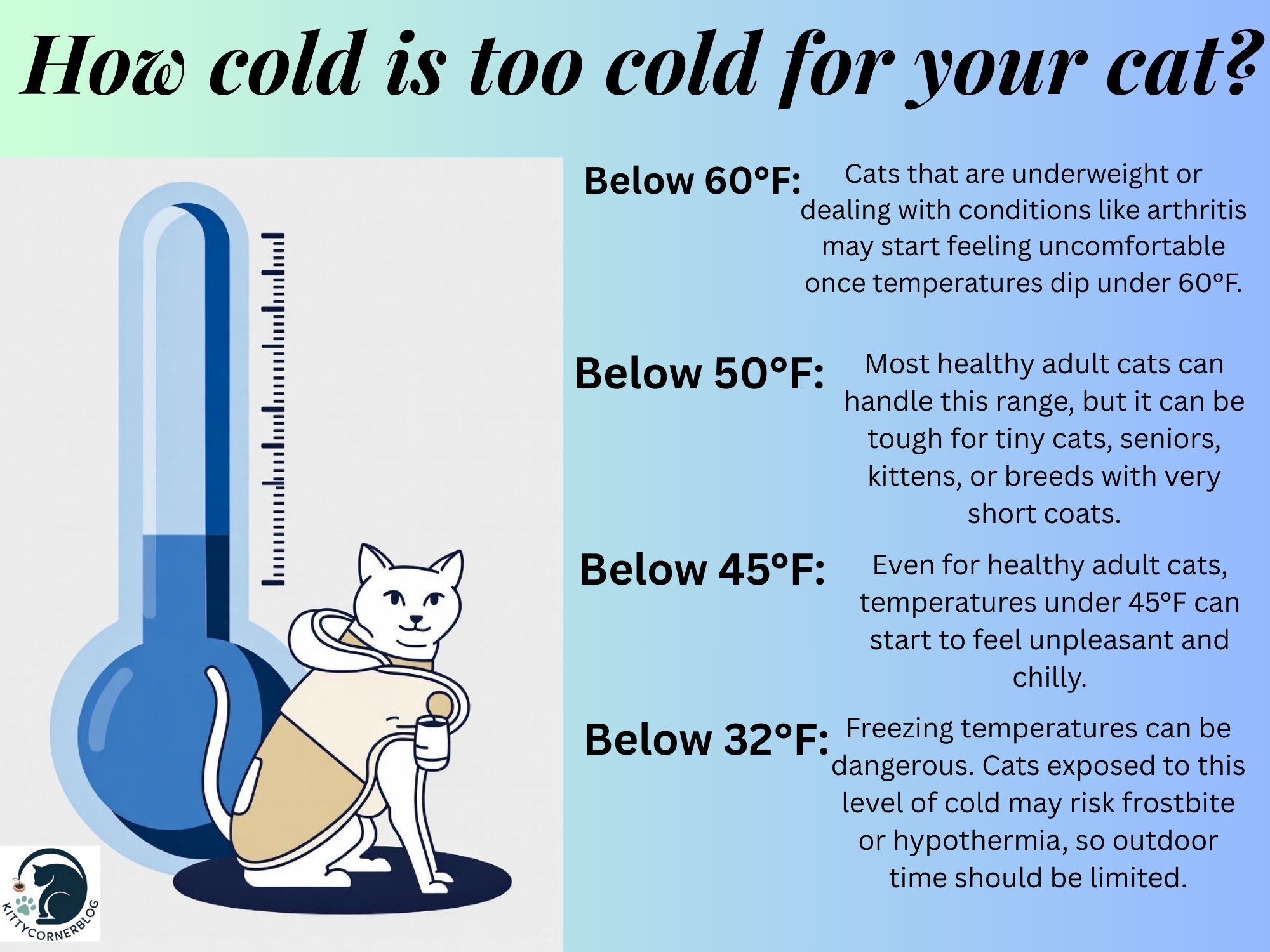
How cold is too cold for cats? Many pet owners wonder about this—especially during the winter months, when temperatures begin to drop. Just as humans have a limit to how much cold they can tolerate, animals also have their own thresholds. In this guide, we’ll talk about exactly that.
By understanding this guide, you’ll be able to enjoy the cold season while also recognizing potential issues your cat may face. We’ll cover how to care for cats during winter, how to keep them warm, and how to support them when the weather gets harsh.
Understanding this cat temperature guide is essential if you want to keep your beloved companion happy and comfortable.
Do Cats Get Cold?
Do cats get cold? Yes, cats do feel cold—especially those with short hair or breeds that originate from desert climates. These cats prefer warm, comfortable places, and during winter, the chilly winds can become quite challenging for them.
When cats feel extremely cold, they often curl up tightly or look for objects that radiate heat. This is why, in winter, cats are often found sleeping near car engines, under the hood, or in sheltered areas.
Studies show that kittens and senior cats are more quickly affected by cold-related illnesses such as hypothermia, because their bodies are not as effective at regulating temperature.
How to Tell If a Cat Is Cold
When cats start feeling cold, they usually appear less active. They curl themselves up tightly and try to hide. By observing these behaviours, you can understand when your pet needs help.
A cat’s normal body temperature is around 38–39°C, which means that as the surrounding temperature drops, the risk of cold-related problems increases.
To help your cat cope with winter, try to keep the temperature above 15°C, especially for indoor cats. With this knowledge, you can create a warm and comfortable space for your furry friend, ensuring they stay cosy throughout the cold season.
What Temperature Is Too Cold for Cats?
When we talk about how cold is too cold for cats, temperatures below 44°F (about 6°C) can start causing discomfort—especially for breeds with short hair, thin coats, or those accustomed to warm climates.
At this point, you may notice your cat shivering, showing signs of discomfort, or becoming less active. This is why it’s wise to limit a cat’s outdoor time during winter.
Cats generally start feeling unpleasant and chilly when temperatures fall below 45°F (7°C). And once the temperature drops below 32°F (0°C)—the freezing point—survival becomes difficult for kittens and senior cats, as they are more vulnerable to cold-related issues such as hypothermia.
What Temperature Do Cats Prefer?
Indoor cats feel comfortable and warm at temperatures between 20–25°C, without experiencing any cold. This range is perfectly normal for them, and at this temperature, cats tend to be more active—playing, eating, and moving around comfortably. Outdoor cats often find warm spots for themselves during winter, but indoor cats depend on us to help keep them warm and cosy.
Can Cats Survive Cold Weather?
Yes, many cats are able to survive cold weather, but this depends on their diet, living conditions, and breed. For example, Norwegian Forest Cats can handle cold climates well because of their thick fur. In contrast, breeds with short hair or thin coats may struggle to survive in harsh winter conditions, making cold weather much more difficult for them.
Can Cats Survive Outdoor In Winters?
Explore whether cats can safely stay outdoors in winter, including temperature risks, survival factors, and essential steps to keep outdoor cats protected.
Cold weather brings several challenges for cats, which every cat owner should be aware of. One major risk is hypothermia, where the body temperature drops rapidly, potentially leading to unresponsiveness. Frostbite can also occur, weakening tissues and often affecting the ears and paws.
Additionally, winter can cause dehydration, which may lead to kidney problems. These risks increase quickly during the cold season if cats do not receive timely care and support.
Signs of Cold Distress
Knowing the early signs that a cat is in danger can help prevent serious complications. These signs include: the body trying to warm itself, cold ears, paws, or nose, shivering, loss of appetite, and lethargy. These symptoms indicate an urgent need for warmth due to the cold.
Even before severe illness sets in, signs such as lethargy, shivering, and a drop in body temperature can appear. If a cat is experiencing hypothermia, it should be wrapped gently and provided with a normal, comfortable temperature. Prompt action can prevent further illness and stop the condition from becoming critical.
Keeping Your Cat Warm in Winter
To protect your cat from the cold during winter, focus on improving the indoor environment with blankets and heated cat beds. Cats prefer soft, cosy bedding, which helps them maintain their body temperature.
The home temperature should ideally stay above 18°C (64°F). At this temperature, cats remain active, healthy, and stress-free. You can also help your cat maintain body heat naturally through play. Provide balls or soft toys that encourage running and chasing, which generates warmth and keeps your cat feeling comfortable.
During winter, offer lukewarm water, as many cats avoid drinking cold water in the cold months. Warm water helps maintain proper hydration. By following these steps, you can create a safe, warm, and comfortable environment for your cat during harsh winters and reduce the risk of illness.
Winter Cat Care Guide
Discover essential winter cat care tips, including warmth, nutrition, grooming, and safety measures to ensure your cat stays healthy during cold weather.
Protecting paws and body from winter’s harshness involves using paw balm to moisturise and shield against cracking, regular nail trimming to avoid snow build-up, and wiping off snow and ice after outings to prevent irritation
. These measures are vital for winter cat care in cold weather and cats. Facts show that salt from roads can harm pads, so thorough cleaning is key. For outdoor cats in winter, this routine reduces injury risks, keeping them agile and comfortable.
Helping Cats With Joint Pain
During winter, kittens and senior cats require special attention. Cold weather can particularly worsen joint pain, which tends to flare up in winter. For the protection of senior cats, veterinarians often recommend orthopaedic beds, which provide support and comfort. Additionally, gentle massages can help improve circulation and ease stiffness.
What To Do in an Emergency
As soon as you notice signs of severe cold in your cat, immediately wrap them in a blanket and monitor their breathing while heading to the veterinarian. Providing a heated pad can help restore their body temperature to normal.
In extreme cold, cats may show signs such as unresponsiveness. If possible, use a thermometer to check their body temperature. Cats often refuse to eat during cold weather, so avoid forcing them to eat, as this can cause stress. Resources like the Blue Cross winter advice provide guidance.
Final Tips for Winter Cat Safety
In this guide, you’ve learned how cold is too cold for cats. Here’s one more important step: if the litter tray is placed outside, move it indoors for convenience during winter.
Provide wet food to help keep your cat hydrated and prevent dryness. Observe your cat carefully for early signs of hypothermia, such as a drop in body temperature, shivering, or swelling.
During the cold months, keep your cat active through play and cuddles, which helps maintain body warmth and keeps them comfortable. Explore PDSA hypothermia infofor more.
Foster a loving space with cuddles for extra warmth. Stay vigilant on weather changes to adjust care. These tips comprehensively address winter cat care, helping your cat thrive.
FAQS
What temperature is too cold for cats?
Temperatures below 7°C become risky for cats, especially outdoors. They can face hypothermia and frostbite if exposed too long.
How do cats survive winter?
Cats survive winter by seeking warm shelters, fluffing their fur for insulation, conserving energy, and relying on food for body heat.
What is the 3-3-3 rule for cats?
The 3-3-3 rule means 3 days to settle, 3 weeks to learn routines, and 3 months to fully adjust and trust.
Can a cat survive a night in the cold?
Some cats may survive a cold night if sheltered, but freezing temperatures can be dangerous and lead to hypothermia or frostbite.
Alvina is a dedicated cat owner and feline care enthusiast with hands-on experience caring for multiple cats. She shares practical, research-backed guidance on cat training, nutrition, and behaviour through KittyCornerBlog, helping cat parents make informed, responsible care decisions.
6 Life Lessons My Cat Taught Me About Happiness My cat taught me that happiness comes from self-acceptance, embracing individuality, and stopping comparisons to build lasting self-respect.