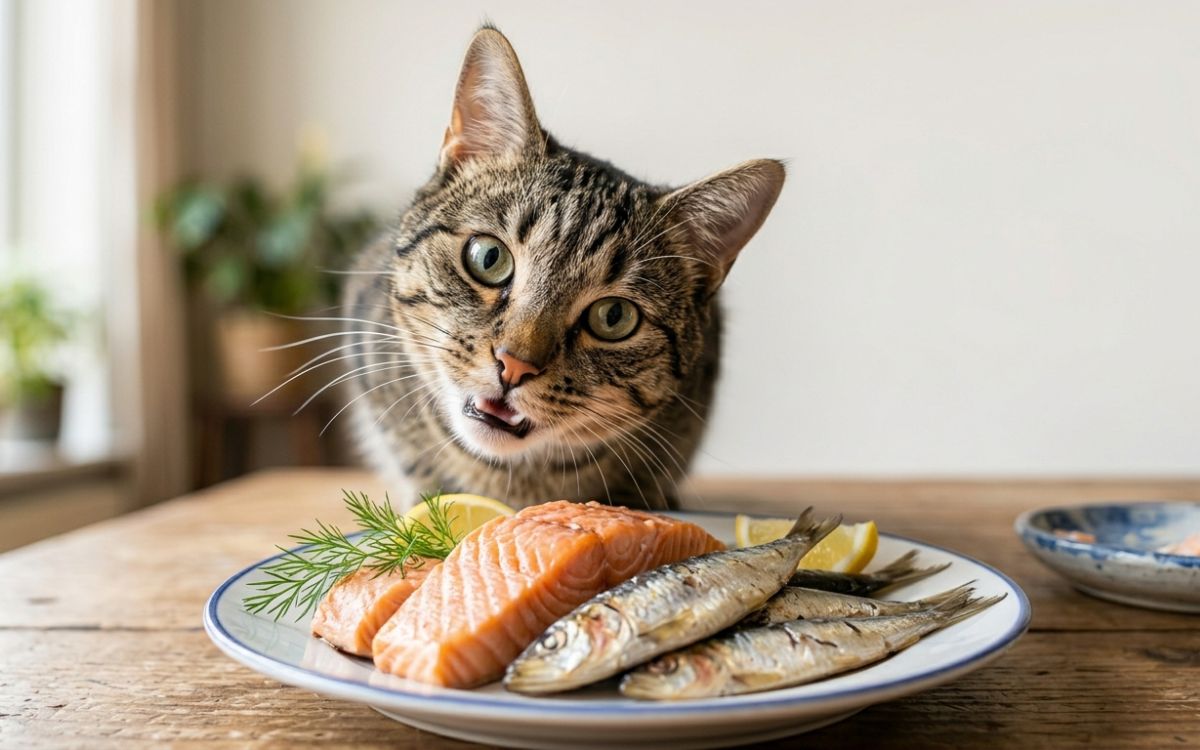
Can cats eat fish? Yes—they can. Fish provides protein and important nutrients that are genuinely beneficial for cats. However, feeding it every day can be impractical and may even cause issues. While fish does offer useful nutrients, it is not a complete, balanced diet for a cat. Keep in mind that fish is best given as an occasional treat rather than a daily staple.
Why Do Cats Like Fish So Much?
Cats go absolutely mad for fish because the strong aroma triggers their natural hunting instincts in the most delightful way. Even though wild cats rarely catch fish in the wild the oily scent and savoury taste make their whiskers twitch with pure excitement every single time.
You will notice how they paw at your plate or meow loudly whenever you open a tin which shows just how deeply this preference runs in their biology. That irresistible pull comes from the high levels of natural compounds in fish that appeal straight to a cat’s senses.
It feels like a special reward for them and you can use this to your advantage during training or bonding sessions. Just keep portions tiny so the love affair stays fun and healthy without tipping into any trouble.
Nutritional Benefits of Fish for Cats
Fish provides your cat with omega-3 fatty acids, which support healthy skin and help keep the coat soft and shiny. These beneficial fats also offer anti-inflammatory properties, promoting joint health and helping your cat stay comfortable and active, even in its senior years.
In addition to healthy fats, fish supplies essential amino acids and taurine—key nutrients that cats cannot produce on their own and must obtain through their diet.
Risks of Feeding Fish to Cats
Mercury Exposure
Frequent consumption of certain fish can lead to mercury build-up in a cat’s body, potentially affecting the nervous system and causing long-term health complications.
Bacteria and Parasites
Raw or undercooked fish may carry harmful bacteria and parasites that can upset your cat’s digestive system and lead to infections or other serious health concerns.
High Sodium and Processed Fish Risks
Processed fish products often contain high levels of sodium and additives, which can be harmful to cats, leading to dehydration, kidney strain, or other health issues.
Choking Hazards (Bones)
Small fish bones can pose a choking risk or cause internal injuries if swallowed, making it important to always remove bones before offering fish to your cat.
Thiaminase and Vitamin B1 Deficiency
Some fish contain thiaminase, an enzyme that breaks down vitamin B1, potentially leading to deficiency if fed excessively, causing neurological problems and loss of appetite.
Can Cats Eat Fish Every Day?
No, you should not feed fish to your cat on a regular basis, as it can increase toxin levels in their body over time. Instead, keep fish as an occasional treat, offering it no more than once or twice a week.
Raw fish is not safe for cats. It can contain harmful bacteria and parasites, and an enzyme that destroys important nutrients. Freezing does not fully fix these problems. Cooked fish is a much safer choice. Plain fish that is boiled, steamed, or baked—without salt or oil—is healthy and easier to digest. Best option: Always give your cat cooked fish, and only as an occasional treat.
What Fish Should Cats Avoid?
What fish should cats avoid includes large predatory types like swordfish or king mackerel because they carry high mercury in fish levels that build up fast. Steer clear of any smoked salted or heavily seasoned varieties too since extra sodium creates unnecessary strain.
Raw options of any kind stay off the menu to prevent thiamine deficiency and other troubles. You also want to skip fish that comes with skin or bones because these create real choking hazard risks or internal injuries.
By choosing carefully you protect your cat from harm and keep their meals both safe and enjoyable every single time.
Can Cats Eat Seafood Sticks?
Seafood sticks usually contain fillers, high salt, and many added ingredients that cats do not need. They offer little to no real nutritional benefit and can even be harmful. These processed snacks may upset your cat’s stomach, so it’s best to avoid them altogether.
Can Cats Eat Fish Fingers?
Fish fingers are not beneficial for cats at all. While your cat may enjoy the taste, they can upset digestion and do not provide any real nutritional value.
Can Cats Eat Fried or Battered Fish?
Fried or battered fish is harmful for cats. The high fat and sodium levels can cause digestive upset and lead to long-term health problems. Simple, plain preparation is always the safest and most suitable choice for your cat.
Can Cats Eat Fish Bones & Skin?
Can cats eat fish bones or skin no because both create serious choking hazard risks and possible internal damage. Always remove every trace before serving so you protect your cat from painful accidents.
It takes just a moment and gives you total confidence in every treat. You can also explore thoughtful advice on feeding fish responsibly at Pets4Homeshere.
Alternatives to Fish in a Cat’s Diet
Chicken is a lean, easily digestible protein that supports muscle health and provides essential nutrients, making it a safe and popular choice for cats.
Turkey is another lean protein option rich in vitamins and amino acids, helping maintain energy levels and supporting your cat’s overall health and growth.
Beef offers high-quality protein and important nutrients like iron and zinc, supporting strong muscles and a healthy immune system when fed in moderation.
Commercial cat food is specially formulated to provide complete and balanced nutrition, ensuring your cat gets all essential vitamins, minerals, and nutrients daily.
Final Thoughts
Fish can be a healthy and tasty addition to your cat’s diet, but it should never replace a complete and balanced meal. While it provides valuable nutrients, feeding it too often can lead to health issues over time.
The safest approach is to offer plain, cooked fish occasionally as a treat, not as a daily food. For your cat’s overall well-being, rely on balanced cat food and other protein sources that meet all their nutritional needs.
In short, moderation is key—keep fish as a special treat, and focus on a well-rounded diet to keep your cat happy and healthy.
FAQs
How often can a cat eat fish?
Cats can eat fish occasionally, about once or twice weekly, as a treat alongside a balanced diet to avoid nutritional imbalances.
Is chicken or fish better for cats?
Chicken is generally better for daily feeding, as it’s balanced and lower in risks, while fish is best given occasionally.
What is the silent killer of cats?
Kidney disease is often called the silent killer in cats because symptoms appear late, making early detection and regular vet checks essential.
What is the healthiest food to feed your cat?
The healthiest food for cats is a complete, balanced diet rich in high-quality animal protein, essential vitamins, minerals, and taurine.
Alvina is a dedicated cat owner and feline care enthusiast with hands-on experience caring for multiple cats. She shares practical, research-backed guidance on cat training, nutrition, and behaviour through KittyCornerBlog, helping cat parents make informed, responsible care decisions.
6 Life Lessons My Cat Taught Me About Happiness My cat taught me that happiness comes from self-acceptance, embracing individuality, and stopping comparisons to build lasting self-respect.