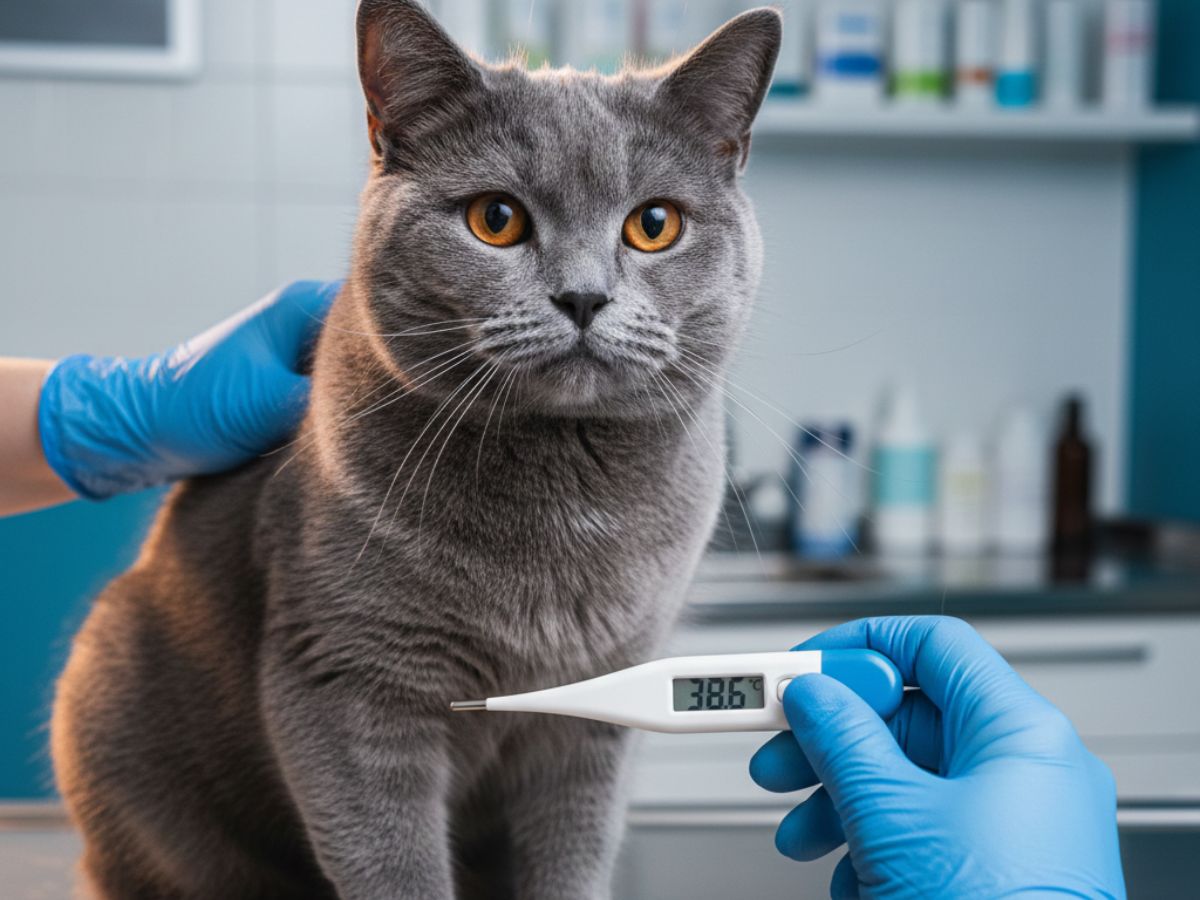
Fever in cats is actually a natural defence mechanism. When a cat is affected by an illness or infection, the body intentionally raises its temperature to make it harder for bacteria and viruses to survive.
Short-term fever acts like a protective shield for cats. However, if the fever becomes persistent or the body temperature rises too high, it can lead to dehydration and internal weakness.
Many pet owners assume their cat has a fever simply because its paws feel warm, but this is a common misconception. Cats’ paws are naturally warm, so warmth alone is not a reliable indicator of fever. Early detection of fever and timely, proper treatment play a crucial role in keeping your pet comfortable and at ease.
What Is the Normal Temperature Range for Cats?
A cat’s normal body temperature typically ranges between 38°C and 39°C. In kittens, the temperature may be about half a degree higher due to their higher activity levels, while in senior cats it may be slightly lower. It is important to remember that a body temperature above 39.5°C is considered a fever and requires timely medical attention.
Causes of Fever in Cats
The causes of fever in cats can vary widely. However, we will now discuss seven common causes that are frequently seen in veterinary cases. Understanding these will help you work more effectively with your veterinarian to identify your pet’s underlying issue more quickly.
Infections (bacterial, viral, fungal)
In cats, bacterial infections often begin from bite wounds or dental disease. Cat flu, on the other hand, spreads very quickly among cats. Fungal infections are relatively uncommon, but when they do occur, they can take a long time to resolve—especially in outdoor cats.
Inflammation
Inflammation anywhere in a cat’s body—from gum inflammation to arthritis—can stimulate the immune system to raise body temperature. This response leads to fever, which can then become difficult to bring down.
Parasites
Fleas, ticks, and worms release toxic substances and damage body tissues, which can trigger fever. In many cats, worm infestations lead to the development of multiple health issues and cause the cat to become weak and lethargic.
Trauma and injuries
Fever in cats often appears after trauma, such as falling from a height, road accidents, or other physical injuries.
In these situations, the body raises its temperature as part of the healing response, helping the cat recover more quickly.
Immune-related diseases
In cats, immune disorders such as haemolytic anaemia, lupus, and other immune-mediated conditions can stimulate the body to raise its temperature. As a result, fever may occur intermittently.
Reaction to medicines
Some cats may react after vaccinations or certain medications, developing a short-term fever within a few hours. Always inform your veterinarian beforehand if your cat has a history of such reactions.
Heat exhaustion
Heatstroke in cats can occur due to several factors, such as excessively warm indoor temperatures during winter, dressing them in heavy clothing, being in a hot car, or staying in poorly ventilated rooms. In such cases, a cat’s body temperature can rise above 40°C, resulting in fever.
Symptoms of Fever in Cats
The signs of fever in cats can appear in different ways, and many of them can be easily observed. Below are the key symptoms that, taken together, provide a clear picture of your cat’s health condition.
Visible behavioural changes
When your usually playful and affectionate cat suddenly becomes quiet and shows signs of lethargy, these are important warning signs. Such changes in behaviour are often among the first indicators of illness in cats.
Lethargy
A cat showing lethargy is one of the biggest clues that it may be unwell. A usually playful and lively cat may now appear quiet and sleepy because it is conserving energy to fight off illness.
Loss of appetite
Cats often eat less during a fever because their sense of taste is affected, making food less appealing. A fever can alter the flavour perception in their mouth, so they may lose interest in eating.
Dry nose
A warm and dry nose is another sign of fever. While it is a minor symptom on its own, when observed along with other signs, it supports the presence of fever.
Why Is Your Cat's Nose Dry
A dry nose can worry cat owners. Learn the common causes, when it’s normal, and when it signals a health concern.
When a cat has a fever, its ears, paws, and abdomen often feel warmer than usual to the touch.
Hiding or reduced activity
During a fever, cats tend to be less active and may hide in dark or cool places. They instinctively seek out cooler spots because it helps them feel more comfortable and eases their discomfort.
Digestive issues (vomiting or diarrhoea)
Fever in cats is often observed along with vomiting and diarrhoea, especially when an infection affects their digestive system. If lost fluids are not replenished, it can lead to dehydration.
How to Tell If Your Cat Has a Fever
To check if your cat has a fever, first feel the temperature of its ears, paws, and abdomen and observe for symptoms such as shivering, lethargy, and hiding. If these signs appear together, it is a clear indication that your cat needs a proper veterinary examination.
How To Tell If Your Cat Has a Fever Without a Thermometer
Even without a thermometer, you can detect fever in cats by paying attention to small signs: loss of appetite, seeking cool places, warm ears and paws, and lethargy. These behaviours are strong indicators that your cat may have a fever.
You know your cat best, so even subtle changes in behaviour can be noticed quickly. Often within just a few hours, you can determine whether your cat is developing a fever.
How to Measure a Cat's Temperature at Home
Use a digital rectal thermometer for cats lubricated with petroleum jelly. Insert gently about 2–3 cm and hold steady until it beeps. Rectal temperature accuracy beats ear thermometers every time. Ear thermometer for cats readings can be half a degree lower, so many vets prefer the traditional method for certainty.
What to Do If Your Cat Has a Fever
Don’t panic if your cat has a fever. Gently move her to a cool and quiet place, offer water, and monitor her breathing. Contact your veterinarian immediately, and never give medication on your own—always follow your vet’s advice before administering any treatment.
Treating Fever in Cats
Veterinary Care
The diagnosis of fever in cats is made after a physical examination. This may include tests such as blood work, ultrasound, X-rays, biochemistry panels, or urinalysis. In severe cases, the cat may need to be hospitalized for close monitoring.
Treatment Options
Options include IV fluids for hydration, medication only prescribed by vets for infections, and diagnostic tests to uncover causes. For more, seeVCA Animal Hospitals. These help in effective management.
At-Home Care
Supportive care at home plays an important role and can significantly speed up recovery. While caring for your cat at home, special attention should be given to comfort and basic needs, helping relieve discomfort quickly while protecting your cat from potential risks.
Do: Keep Your Cat Hydrated
During a fever, offer wet food and provide a water fountain to encourage your cat to drink more. After diarrhoea, cats are especially prone to dehydration, and ensuring adequate water intake at home can help make up for fluid loss.
Do: Use a Damp Cloth on Paws, Nose, and Ears
To help reduce body temperature, gently apply a cool or damp cloth to your cat’s paws to assist the body in returning to a normal temperature. This can be repeated for a short period to provide comfort.
Do: Keep Your Cat in a Cool, Fresh Room
For comfort, move your cat to a quiet, well-ventilated, and shaded area. Fresh air helps the body regulate its temperature more effectively and supports faster stabilization.
Don’t: Use Over-the-Counter Medications
Never give human medications to cats, as they are toxic and potentially life-threatening for them. Always follow your veterinarian’s advice to ensure your cat’s safety, comfort, and speedy recovery.
Conclusion
So finally, in this 2025 guide, you have learned about fever in cats—its causes such as heatstroke, infections, and inflammation, early warning signs like lethargy, loss of appetite, and warm ears and paws, and proper management including seeking veterinary care and keeping your cat well hydrated.
With this knowledge, you will be able to identify fever early, reduce your cat’s discomfort, and play an important role in improving both their health and quality of life. For insights, visit PetMD. Healthy cats bring joy!
Fever In Cats-FAQs
1. Can you tell if a cat has a fever by touching?
Touching can show extra warmth, but it’s unreliable. Only watching symptoms and using a proper thermometer can confirm a fever.
2. How to check if a cat has fever without a thermometer?
Watch for lethargy, warm ears, reduced appetite, hiding, and low activity, but only a thermometer can reliably confirm fever properly.
3. Can you tell if a cat has a fever by their ears?
Warm ears can hint at fever, but unreliable alone. Check appetite, activity, and behaviour while confirming with a proper thermometer.
4. Can a cat's fever go away on its own?
Some mild fevers may settle naturally, but ongoing or high fevers need quick veterinary assessment to keep your cat healthy.
Alvina is a dedicated cat owner and feline care enthusiast with hands-on experience caring for multiple cats. She shares practical, research-backed guidance on cat training, nutrition, and behaviour through KittyCornerBlog, helping cat parents make informed, responsible care decisions.