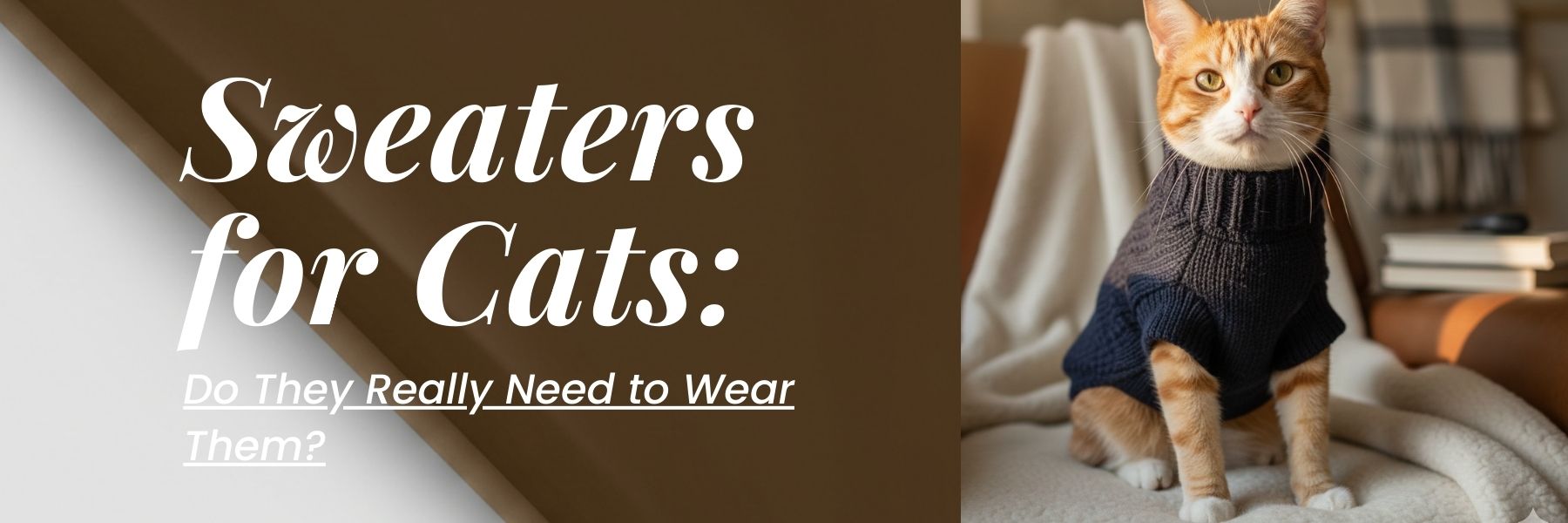
Sweaters for cats are really necessary You’ve probably seen plenty of social-media posts where someone is dressing up their cat in a cute little sweater. They may look absolutely adorable, but have you ever wondered whether our little feline friends actually need sweaters or clothing to stay warm in winter the way humans do?
The idea of putting clothes on cats crosses almost every pet owner’s mind, especially during the colder months. But most cats regulate their body temperature naturally through their thick fur.
In this guide, we’ll take a closer look at whether sweaters are truly necessary for cats, the potential downsides, and better ways to keep your pet comfortable without putting them at risk of overheating.
Do Cats Actually Need Sweaters?
In most cases, cats do not need sweaters. Their fur — along with their naturally higher metabolism — already provides the warmth they need during winter, and they regulate their body temperature far better on their own.
Overdressing can interfere with a cat’s natural balance and may even put them at risk of overheating. There are a few situations where a sweater can be helpful, such as for hairless breeds in cold weather, cats who have just been groomed and have a reduced coat, or those recovering from surgery.
However, even in these cases, the sweater should not be left on for long periods. Clothing can make grooming difficult for cats, and wearing anything on their body may make them feel restricted, preventing them from moving freely.
Do Cats Like Wearing Sweaters? (Behaviour & Stress Signals)
Most cats dislike wearing sweaters and quickly start showing signs of stress — such as wide, anxious eyes, freezing in one spot, or excessive grooming. All of these behaviours indicate that the cat is feeling uncomfortable, especially when the sweater is left on for too long. Many cats will immediately start meowing or walk in an unusual, awkward way. These are clear signals that they want the sweater removed right away.
Potential Risks of Cats Wearing Sweaters
Putting a sweater on a cat can increase the risk of heatstroke. Because once a cat is dressed in a sweater or any extra clothing, it can easily start to feel too warm — and since cats don’t sweat the way humans do, they cannot cool themselves down efficiently.
They rely mostly on grooming to regulate their temperature. Extra clothing or additional indoor heating can therefore become uncomfortable or even dangerous for your pet. Signs of overheating may include rapid breathing or unusual lethargy.
Sweaters can also lead to stress and anxiety in cats. This discomfort may cause them to stop eating properly or make them less willing to move around normally.
Exceptions – When Sweaters May Be Helpful
Although there are very few situations where sweaters are genuinely beneficial for cats, it’s always important to consult a veterinarian before trying anything new, just to avoid any unexpected problems. Below, we’ll discuss a few cases where a sweater might actually be helpful.
Hairless Breeds (Sphynx, Peterbald, etc.)
Hairless cats often do need extra warmth because breeds like the Sphynx lack the insulating layer of fur that other cats have. This makes them more prone to feeling cold during winter. To help them stay comfortable, you can provide a soft, washable pet sweater and a warm bed so they can maintain a body temperature close to 38°C
Post-surgery recovery and shaved areas
Cats that have recently undergone surgery or grooming can benefit from wearing a sweater, as it helps protect shaved areas from cold air and prevents them from licking the sensitive spots.
This reduces the risk of infection and supports quicker healing. Many owners consider these garments part of their cat’s post-surgery recovery care. However, it’s important to ensure that the clothing is neither too tight nor too loose when putting it on.
Extremely cold environments (as a short-term aid)
In extremely cold weather, outdoor cats may wear a sweater for a short period, but it’s important to remove it once they return to a normal indoor temperature to prevent overheating.
Keeping a cat dressed for too long can lead to several problems. These winter cat-care tips also highlight many indoor alternatives that can keep your pet warm without the need for clothing.
Cats And Cold Weather
Help your cat stay safe in chilly months with clear guidance on cold risks, winter care, and ways to keep them warm outdoors.
When introducing a sweater to your cat, patience is essential. Allow your pet to sniff and explore the item first so they can get familiar with it. Use positive reinforcement and try to create a calm, stress-free environment. Gently slip the sweater over the front paws, but avoid applying any pressure.
If your cat shows any unusual or stressed behaviour, stop immediately. The sweater must fit properly — snug but not tight — so your cat can breathe comfortably and move around without restriction.
Safer Alternatives to Sweaters
Making small environmental adjustments is often a better choice than putting a sweater on your cat. Sweaters can restrict natural movement and may even lead to overheating, stress, or anxiety. These simple environmental tweaks provide comfort and warmth without the risks or discomfort associated with clothing.
Heated bedding
Self-warming mats can provide your cat with great comfort on cold winter nights. Even without electricity, they work effectively to keep your pet cosy. Heated sleeping spots, such as microwavable pads, encourage cats to use them voluntarily. Place these mats in your cat’s favourite spots for easy and convenient access.
Extra blankets
Place soft fleece blankets in cosy corners, as cats love lying on soft surfaces that help them feel warm and relaxed. These blankets are affordable, washable, and lightweight, allowing your cat to get up easily whenever needed. Adding familiar scents to these items can also help reduce stress and make your cat feel more comfortable.
Warm indoor temperature
During winter, maintain your room temperature around 20–22°C, which is perfectly safe and comfortable for cats. When the room stays at this temperature, your cat generally won’t need extra items like sweaters or additional clothing.
However, excessive heat can be harmful, so avoid overheating. Place your cat’s bed in a comfortable spot and take extra precautions by ensuring the area is safe and secure in advance.
Insulated winter shelters for outdoor cats
Straw-lined cat shelters trap heat for roamers, elevated to avoid dampness. Solar-powered options add eco-friendly warmth in tough weather. This ensures outdoor cats in winter stay protected without restrictive clothing.
Final Verdict
In conclusion, you’ve learned that sweaters are suitable for cats only in very specific situations and can often cause more problems than benefits. To keep your cat warm, it’s better to choose alternatives that meet their needs without causing discomfort.
Your cat prefers to have her needs met naturally, without unnecessary extras. Keep your home warm and avoid putting clothing on her, so both you and your cat can enjoy a happy, comfortable life together. For more tips, check PetMD on cat careor RSPCA advice.
FAQS
Should I put a sweater on my cat?
Only if your cat is hairless, recently shaved, or in extreme cold. Most cats don’t need sweaters.
Can I leave my cat in a sweater?
Never leave a cat unattended in a sweater. They could overheat, get tangled, or injure themselves trying to remove it.
What annoys cats the most?
Cats dislike forced handling, loud noises, unfamiliar scents, restricted movement, and wearing clothing, which can cause stress or anxiety.
How long should I let my cat wear a sweater?
Start with short periods of 5–15 minutes, gradually increasing only if the cat tolerates it, always under supervision.
Alvina is a dedicated cat owner and feline care enthusiast with hands-on experience caring for multiple cats. She shares practical, research-backed guidance on cat training, nutrition, and behaviour through KittyCornerBlog, helping cat parents make informed, responsible care decisions.