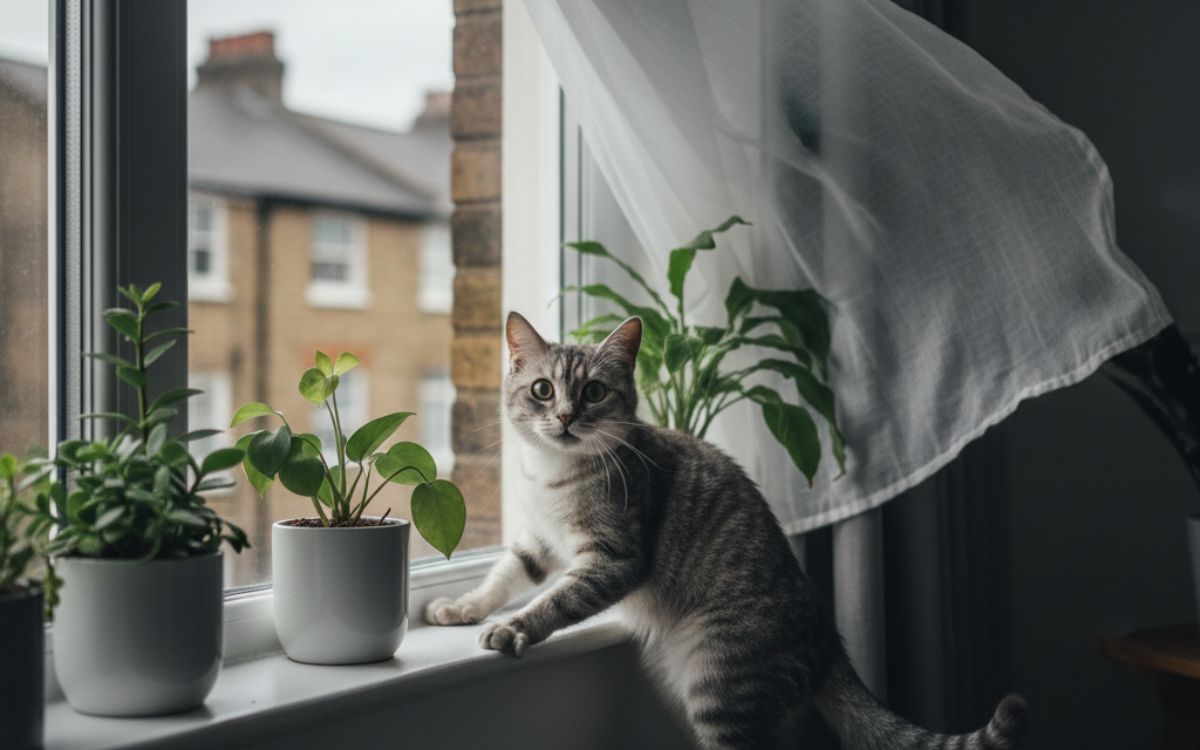
How far can cats fall without getting injured? Many cat parents want to know this. How do they maintain their balance even after falling? If a cat falls from the second floor, it can easily maintain its balance because their righting reflex activates quickly while they are falling. They adjust the position of their body in the air and land on their paws.
However, as the height increases, the risks also increase because cats do not have enough time to change their position. This can lead to many problems such as broken bones or internal injuries. Studies show that if a cat falls from the first floor, it may get minor injuries, but if it falls from the 3rd or 4th floor, fractures are also possible.
The Science behind How Cats Survive Falls
Righting Reflex Explained
The cat righting reflex is a remarkable phenomenon that helps a cat land safely without injury. With this reflex, a cat uses its inner ear and eyes to sense the height, and then adjusts the position of its body accordingly. The righting reflex basically involves arching the back and twisting the front and back parts of the body separately. Kittens develop this ability very early, and from a height of about 90 cm, they can change their body position within just one second.
Flexibility and Body Structure
Nature has given cats incredible flexibility. Their spine bends in ways that humans can hardly even imagine, and this helps them maintain the correct body position while falling. Their collarbone is very small, which allows their shoulders to move freely.
They also have strong muscles that give power to their legs and paws during a fall. These muscles provide great support when a cat is falling—they absorb the impact and provide the strength needed to prevent the bones from breaking.
Real Survival Heights – What Science and Reports Show
There are astonishing stories of cats surviving falls from great heights. One record-breaking cat fell from a 32-story building yet survived with only minor injuries. Research shows that cats falling from heights between 2 and 32 stories have a survival rate of over 90%, provided they receive timely medical treatment.
High-rise syndrome explains that falling from a greater height can sometimes cause fewer injuries. This is because the cat has more time to adjust its posture during the fall.
In cities, veterinary reports show the types of injuries cats suffer from falling — such as broken jaws, muscle fractures, and broken bones. A key study from the 1980s found that the survival rate peaks after a fall from around seven stories because of the parachute effect. For more on this, check high rise syndrome.
Common Places Cats Fall From
High Items in Homes
Cats love climbing tall objects in the house, like cupboards or the fridge. But the injuries or wounds caused by falling from heights can become a serious problem for them, especially for older cats. Their bones are already weakened with age. In senior cats or those with joint pain, the righting reflex gets affected, which makes it difficult for them to maintain proper balance while jumping.
Trees
It is often seen that cats fall from trees. They climb up easily using their paws, but coming down head-first becomes difficult because of gravity. This makes them panic, and there is a risk of slipping from the branches of the tree.
Balconies and Second-Floor Falls
Falling from balconies or the second floor can be extremely dangerous. This is because during such falls, cats don’t get enough time to fully rotate their bodies. As a result, the cat may go into shock, suffer broken bones, or experience pressure on the chest. Jumping from a great height increases the impact of the fall. In multi-level homes, installing balcony screening is an excellent solution to prevent such accidents.
High-rise Buildings
Cats that fall from tall buildings often survive. While falling, they reach terminal velocity and adopt a spread-out posture, allowing them to land on their paws. Common injuries include jaw fractures and pneumothorax. Besides this, you can have any other issues in your cat diagnosed with the help of a veterinarian. Immediate treatment is always better.
Risk Factors That Increase Injury
Some factors make a cat’s fall more dangerous. These factors influence how far a cat can fall without getting injured. Age, weight, and overall health play an important role. For example, if a cat is older, its bones are more fragile and can get damaged even from a lower height.
Similarly, if a cat is overweight, it may not be very active and may not be able to use its righting reflex quickly, which can lead to muscle fractures. In addition, if your cat already has a pre-existing health condition, a fall can be traumatic and far more dangerous for her.
How to Help Your Cat Lose Weight Safely
Learn how to help your cat lose weight safely with practical tips, healthy diet advice, and expert guidance for better feline health.
To understand safe heights for cats, we must first know their limits. Generally, a cat can control a jump from a one-story height, but even then, internal injuries cannot be completely ruled out.
The real risks begin from two stories, where a cat may experience several complications even after using the righting reflex. The height at which a veterinarian’s concern becomes necessary is anything above 3 meters.
Signs Your Cat Is Hurt After a Fall
Cats are very good at hiding pain after a fall. But you must pay close attention to all their behaviours — such as limping, which can indicate a fracture, swelling, or unusual breathing. Eating less, hiding, and staying quiet are all signs of possible internal injuries. By noticing these symptoms early, you can help your cat get timely treatment and recover faster.
What to Do If Your Cat Falls
If your cat has fallen, the first thing you need to do is stay calm, because if you panic or start shouting, your cat may also go into trauma, not understanding what has happened — so patience comes first.
After that, prevent your cat from moving too much so the injury does not worsen. Do not give food, water, or medicine on your own. Immediately consult a veterinarian and follow every step according to their advice.
There are also many symptoms that appear after about 24 hours, such as vomiting or lethargy. Keep a close eye on your pet for these signs. For expert advice, see this vet resource on cat falls.
FAQS
Can a cat survive a 3 storey fall?
Yes, many cats can survive a three-storey fall due to their righting reflex and body flexibility, but injuries are still possible.
What is the 3-3-3 rule for cats?
The 3-3-3 rule explains settling time: three days to decompress, three weeks to adjust, and three months to feel fully comfortable.
Can a cat survive a 5 floor fall?
Cats can survive a five-floor fall, often reaching terminal velocity and positioning their bodies, but survival depends on age, health, and landing surface.
Can a cat survive a 4 metre fall?
Most healthy cats can survive a four-metre fall, using their natural righting reflex, but they may still suffer fractures or internal injuries.
Alvina is a dedicated cat owner and feline care enthusiast with hands-on experience caring for multiple cats. She shares practical, research-backed guidance on cat training, nutrition, and behaviour through KittyCornerBlog, helping cat parents make informed, responsible care decisions.