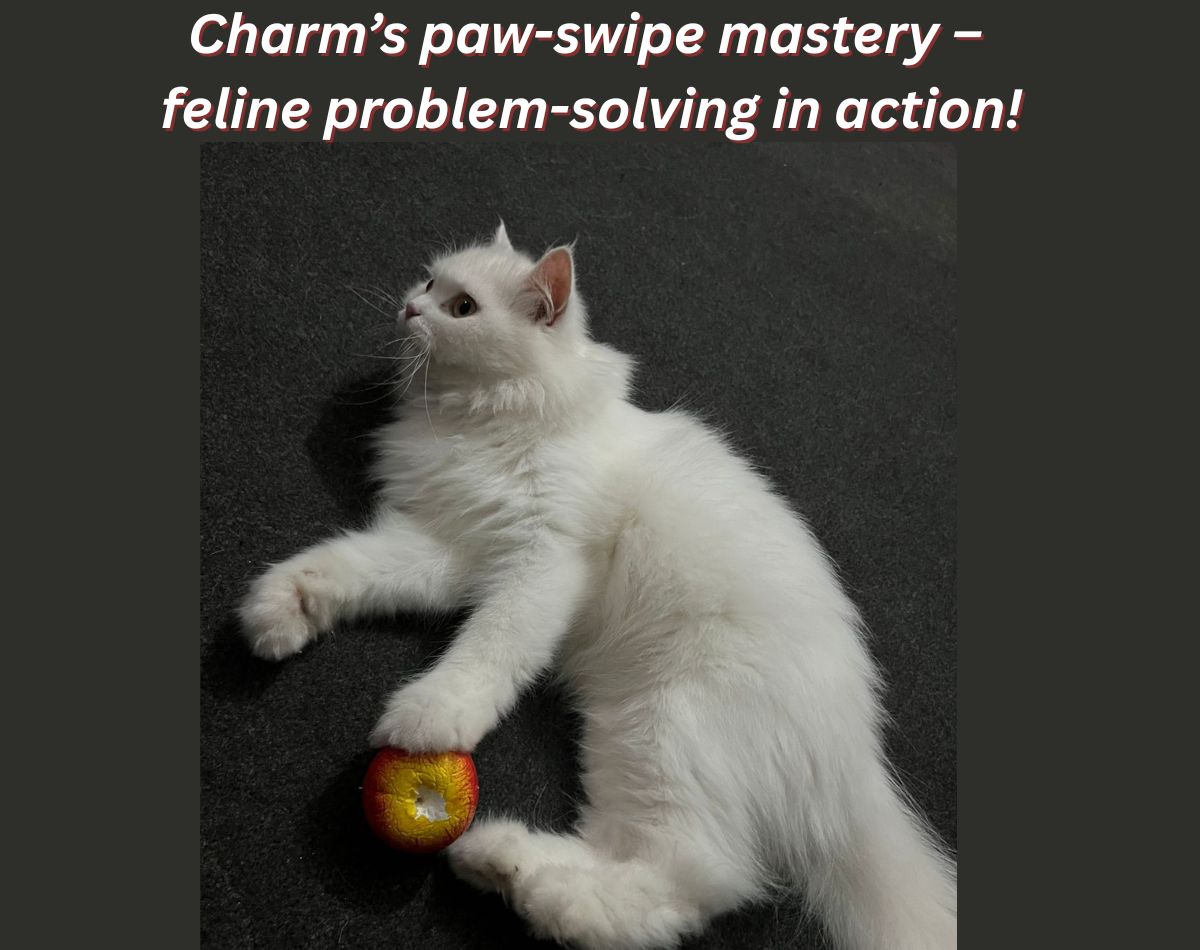
How smart are cats becomes clearer when we look beyond their independent nature and explore the science behind feline cognition. Although they may not show obedience like dogs, cats possess complex brains, strong problem-solving skills, and an impressive ability to learn through observation. Research shows that cats demonstrate memory, reasoning, and even emotional awareness in ways often overlooked.
By examining how a cat’s brain functions, comparing feline intelligence with dogs and humans, and observing everyday behaviours, we gain a deeper understanding of their capabilities. This guide explores the full scope of feline intelligence, from scientific findings to simple at-home tests.
What Makes Cats Intelligent? Understanding Feline Cognition
Cats show their feline intelligence through a mix of sharp instincts and quick learning, driven by curiosity rather than endless treats. Their cat behaviour and learning relies on associative learning, where they link actions like pawing a door to getting outside, often faster than you expect.
Motivation plays a huge role in their motivation and reward systems, with play or food sparking exploratory behaviour that hones skills. However, cats can appear distant during training due to animal training limitations and their independent nature from wild ancestors. Feline cognition studies reveal they excel in self-motivated tasks, using sensory perception in cats like keen hearing to track prey or predict your moves.
Researchers face research challenges with cats because of their reluctance to participate in studies, preferring home environments over labs. A key 2016 neuron count study highlighted how cortical neurons in cats support this adaptability, proving domestic cat learning ability thrives on real-life puzzles.
Scientists study cat cognitive abilities with clever setups like puzzle feeders that test feline problem-solving skills and attention and tracking behaviour. They observe instinct-driven responses in natural settings, noting how cats use observational learning to copy owners opening cupboards.
This behavioural observation shows cats grasp routines quickly, meowing at exact feeding times thanks to strong understanding of time. Animal cognition metrics include how well they handle changes, adapting to new homes with minimal stress. Facts from scientific studies on cats list that felines remember hidden toys for hours, showcasing memory retention better than many pets.
Their environmental awareness lets them navigate busy households, dodging dangers with ease. All this ties into evolutionary intelligence traits that made cats top hunters, blending survival smarts with companionship today.
Inside a Cat’s Brain: Structure, Function, and Neuron Count
A cat’s brain might seem small at around 25 grams, but feline brain size packs efficiency when compared to body weight, giving high cat brain structure power for quick thinking. The cerebral cortex in animals folds deeply in cats, increasing surface area for complex cognitive processing in felines like planning ambushes or recalling safe spots.
Cortical neurons in cats number about 250 million, far fewer than in humans but enough for sharp prediction of movement during play. The 2016 neuron count study by Suzana Herculano-Houzel counted these precisely, showing cats edge out some larger animals in density. This neural complexity supports cause and effect behaviour in cats, such as pushing objects to reach treats.
Brain regions handle vision dominantly, with over 50 percent dedicated to sight, boosting sensory perception in cats. Fun fact: a cat’s brain uses 90 percent similar structure to ours, explaining emotional bonds.
Function-wise, the hippocampus maps territories, aiding long-term memory in cats that lasts years for familiar faces or paths. The prefrontal area weighs risks, influencing problem-solving in domestic cats like unlatching windows. Compared to dogs, cats focus on solo efficiency rather than group cues, per animal intelligence research.
Evolution shaped this compact setup for stealthy survival, with omega-3 fats from diet enhancing connections. Studies link higher activity here to better adaptation in urban cats, dodging cars with split-second decisions. Overall, cat brain facts prove size isn’t everything; it’s the wired ingenuity that drives feline intelligence.
Cat Intelligence VS Dogs: Which Species Is Smarter?
The cat vs dog intelligence debate heats up when looking at training differences between cats and dogs, with canines eager for commands and felines selective about participation. Dogs shine in social tasks due to pack history, while cats excel in independent feline problem-solving skills rooted in solitary hunting.
Comparing cats and dogs shows pups have around 530 million cortical neurons versus cats’ 250 million from the 2016 study, aiding group cooperation. Yet cats counter with superior object permanence in cats, finding hidden items longer than dogs in tests. Strengths vary: dogs follow pointers flawlessly, cats predict solo paths using prediction of movement.
Species-specific intelligence means no clear winner; motivation sways results, with food luring cats into tricks dogs do for praise. Research highlights motivation-based training as key, where cats ignore repetitive drills but master self-reward puzzles. A fact from studies: cats train humans via timed meows, flipping the script on obedience.
Dogs suit guide animals and service animals roles better, reading human emotions deeply. Cats, however, adapt to changes swiftly, showing environmental awareness in new settings. The debate boils down to tasks – cats ace stealth and memory, dogs teamwork and loyalty. Both display unique cat cognitive abilities or canine equivalents, enriching lives differently.
Cat Intelligence VS Humans: How Do They Compare?
Cats grasp object permanence in cats early, searching for vanished toys like a two-year-old child, per human–cat cognitive comparison studies. They understand cause and effect behaviour in cats by linking lever pulls to food drops, outperforming toddlers in simple chains.
Long-term memory in cats holds details for a decade, recalling owners after separations, akin to preschool recall levels. However, abstract thinking lags; no tool invention here, just practical associative learning. Cognition development stages in felines mirror human kids up to age three in social referencing, glancing for reassurance during scares.
Memory tests show cats retain routines for 16 hours short-term, beating many animals in memory retention. They sync emotions with us, lowering stress via purrs in human–animal interaction.
Facts include cats recognising up to 50 human words, building on behavioural cues. Unlike children, cats prioritise survival smarts over language, but their empathy rivals ours in bonding. This feline intelligence creates parallel worlds of cleverness, delighting owners daily.
Behavioural Signs of an Intelligent Cat
Watch for problem-solving in domestic cats like stacking items to reach counters, revealing sharp feline problem-solving skills honed by curiosity. Communication stands out when cats use tailored meows or tail flicks as behavioural cues to convey needs, mastering human–animal interaction.
Observational learning shines as they mimic your actions, opening doors after watching once. Routine understanding shows in pre-dinner pacing, tapping into understanding of time with clock-like precision.
Social savvy includes reading moods, approaching calm family members while avoiding chaos, boosted by environmental awareness. They predict events, hiding before vet visits from bag cues. Facts from observations: clever cats adapt toys into tools, like using strings for pulls. This mix of instinct-driven responses and learned tricks paints a picture of versatile cat cognitive abilities.
The Smartest Cat Breeds: Which Breeds Stand Out?
Breeds like Siamese excel in trainability, learning fetch or walks on leads thanks to vocal, people-focused natures from ancient origins. Abyssinians follow with energetic puzzle-solving, cracking feeders swiftly due to high curiosity drives. Bengals, with wild ancestry, display top feline problem-solving skills in escaping rooms or hunting toys relentlessly.
Maine Coons, large and gentle, unlatch gates with ease, blending size with smarts for family life. Burmese crave interaction, using observational learning to join games. Differences arise between working breeds like Turkish Vans, who swim and adapt, and companions prioritising bonds. All highlight species-specific intelligence tailored to lifestyles.
How Smart Is Your Cat? At-Home Intelligence Indicators
Everyday antics like “stealing” treats from sealed jars showcase problem-solving in domestic cats and quick associative learning. Cats demonstrate environmental awareness by mapping homes perfectly, finding cool spots or safe hides instinctively. Memory shines when they return to old play areas post-move, relying on long-term memory in cats.
Adaptation to noises or schedules reveals prediction of movement and routine grasp. A common sign: mirroring your yawns as empathy in human–animal interaction. These indicators, from PetMD’s cat behaviour guide, prove even lazy cats hide clever depths.
How To Test Your Cat’s Intelligence at Home
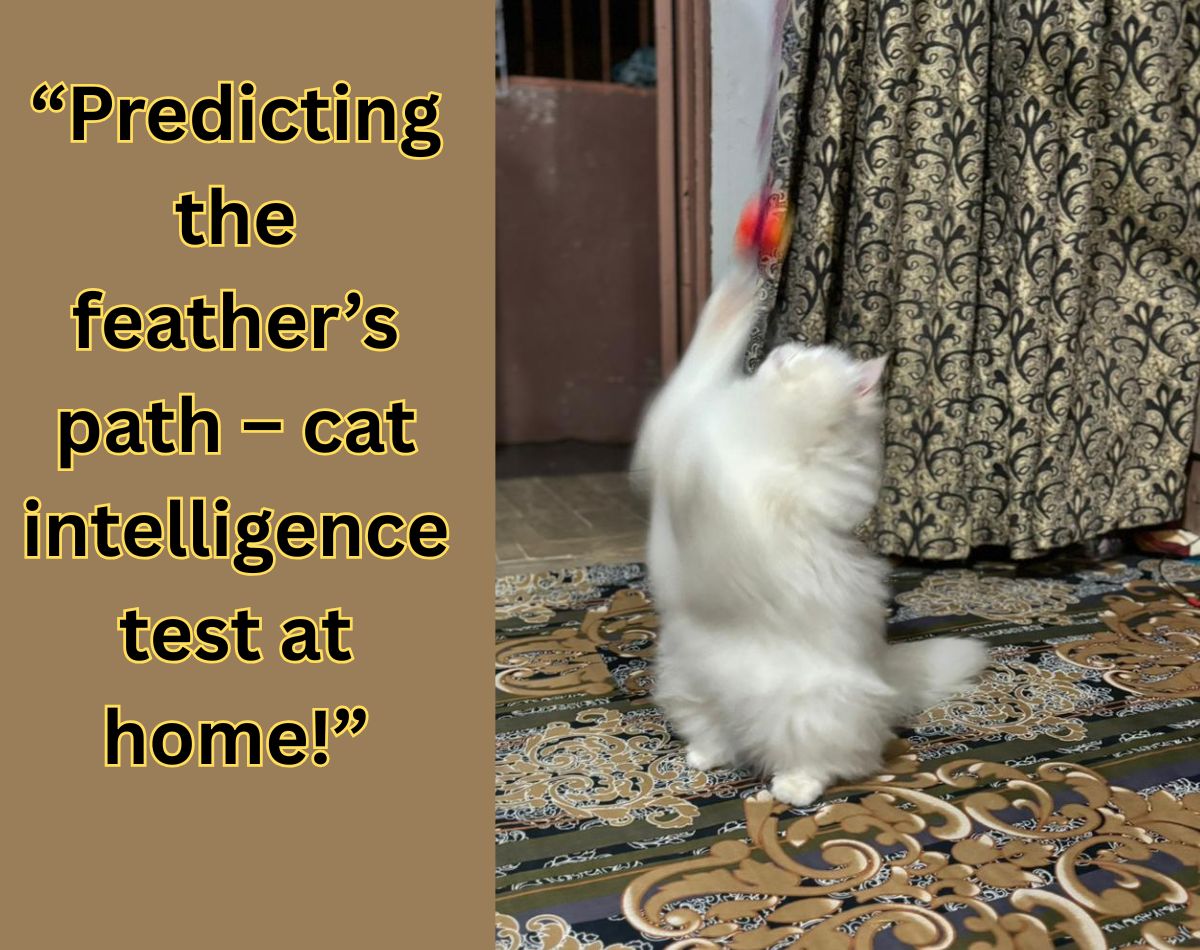
Simple cat intelligence tests at home start with hiding a toy under a cloth to check object permanence in cats; persistent searching means success. Roll balls behind furniture for prediction of movement, noting if they wait at exits. Puzzle boxes with treats test problem-solving tasks, timing how fast they figure levers.
Assess memory by shifting feeding times slightly, watching anticipatory behaviours. Pair carriers with play to flip associations positively. These fun activities, inspired by Oregon State University feline studies, uncover hidden cat cognitive abilities without stress.
FAQS
How intelligent are cats compared to dogs?
Cats and dogs show different types of intelligence; cats excel in problem-solving and memory, while dogs perform better in social learning and trainability.
What is the 3-3-3 rule of cats?
The 3-3-3 rule explains adjustment stages: three days to decompress, three weeks to learn routines, and three months to feel fully secure.
What is the IQ of an average cat?
Cats do not have a formal IQ score, but cognitive tests suggest abilities similar to a human toddler in memory, awareness, and problem-solving.
How smart is a cat compared to a human?
Cats compare roughly to a one- to two-year-old child in object permanence, memory, and basic reasoning, though intelligence varies greatly among individuals.
Alvina is a dedicated cat owner and feline care enthusiast with hands-on experience caring for multiple cats. She shares practical, research-backed guidance on cat training, nutrition, and behaviour through KittyCornerBlog, helping cat parents make informed, responsible care decisions.